
Why Experiencing Art in Person Changes Everything


A painting seen on a phone can look finished, clean, and complete. The same painting in a gallery can look alive.
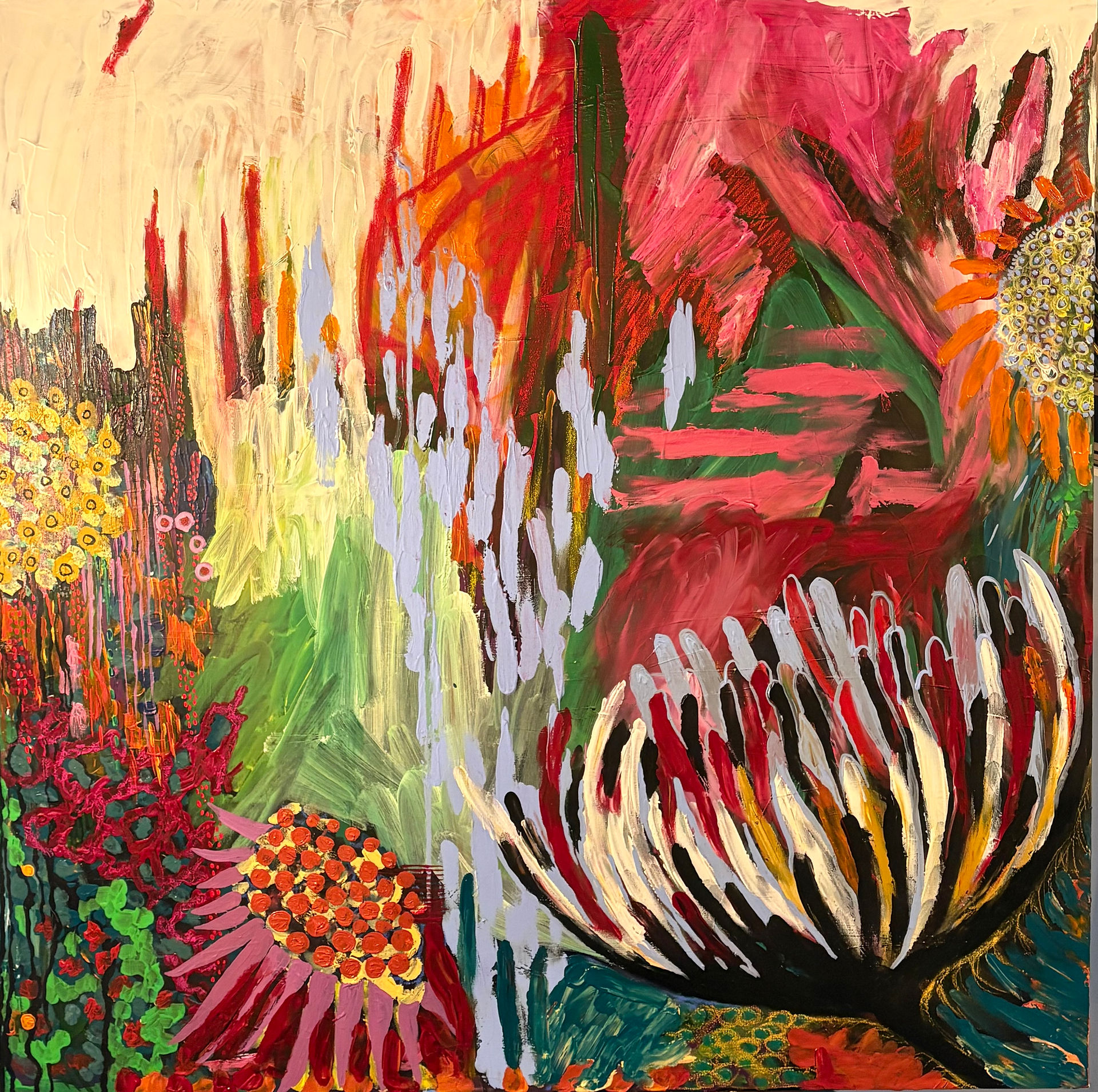
Stand close enough, and the surface begins to speak. A line thickens where a hand hesitated. A color shifts as light moves across it. A patch of paint rises from the canvas like a small ridge. What looked flat in a book suddenly has weight, rhythm, and weather. The image is no longer just something to recognize. It becomes something to meet.
Screens and books have changed how people discover art, often for the better. They make collections searchable. They bring distant museums into reach. They help people compare works, read labels, and learn names. Yet even the best reproduction remains a translation. It carries information, but it cannot carry the whole encounter.
To stand before a work of art is to share space with it. That simple fact changes everything.
The surface tells a story that reproductions flatten
Many online art images are built for speed. They are cropped, lit evenly, sharpened, and scaled to fit a screen. That makes them useful, but it also makes them strangely obedient. They sit still. They behave. They hide the mess and struggle that often make art powerful.
In person, the surface resists that smoothness.
A painting is not only an image. It is an object made by pressure, touch, revision, and time. Brushstrokes can be thin as breath or thick enough to cast a shadow. A glossy area may sit beside a matte one. A blue that looked uniform in a reproduction may turn out to contain green, gray, violet, and a dry scrape of white.
This is where looking becomes a slower kind of attention.
Think of an oil painting with visible impasto, where paint stands up from the canvas. On a screen, that texture may register as color. In person, it becomes terrain. The eye moves over peaks and ridges. The light catches the raised paint differently as the viewer shifts position. The painting changes because the body changes position. That small movement cannot be copied by zooming in.
Watercolor offers a different lesson. Its beauty often lies in absorption, stains, and edges that bloom into paper. A printed image can show the composition, but it rarely captures how pigment sinks, pools, or thins. Pastel can look soft in a book, yet in person it may feel powdery and immediate, as if the color is resting on the surface rather than sealed inside it.
Even a smooth painting gains from presence. A carefully blended portrait may reveal tiny corrections around the mouth or hands. A dark background may hold layers that only appear after the eyes adjust. A polished surface may reflect light from the gallery, reminding the viewer that the work is not a window but a thing in the room.
This is one reason experiencing art in person matters so much. It restores the physical evidence of making. It lets the artist’s decisions appear as marks of their hands' movement across the surface.
Color changes when it enters the room

Color is one of the first things reproduction betrays.
A screen produces light. A painting reflects it. That difference sounds technical, but it changes the entire experience. On a phone or laptop, color depends on brightness settings, screen quality, compression, and glare. In a gallery, color depends on pigment, surface, lighting, distance, and the surrounding space.
Some colors seem to breathe in person. A deep red may feel warm from across the room but reveal cooler undertones up close. A black may contain brown, blue, or green. A white may glow, chalk, yellow, or recede. Gold leaf may flare when viewed from one angle and quiet down from another.
The room also matters. A painting hung near a pale wall behaves differently from one surrounded by dark paneling. Natural light, when museums allow it, can make a work feel different in the morning than it does later in the day. Even carefully controlled museum lighting cannot make color completely fixed. That instability is part of the life of the work.
Color also has scale. A small orange rectangle in a textbook can look pleasant. The same orange spread across a large canvas may feel almost physical. It can warm the face, pull the body forward, or make nearby blues seem deeper. Large fields of color, especially in modern and contemporary art, often need the viewer’s body in front of them. Their force depends on size.
This is difficult to explain until it happens. A reproduction can make a painting appear large. It cannot make the viewer feel small in its presence.
Dates and context make the work more Significant

Seeing art in person is not only about sensation. Knowledge changes the encounter too. A date on a wall label can feel small, almost decorative, but it can open the room around a work.
A painting made in 1500 does not ask the same questions as one made in 1900. A portrait painted before photography carried different social weight than one painted after cameras became common. A religious panel made for devotion worked differently from a painting made for a modern gallery. A work created during war, exile, revolution, colonial expansion, or social upheaval carries pressure from its moment.
Dates help art step out of the vague category of “old” or “famous.” They place the work inside a life.
Vincent van Gogh painted The Starry Night in 1889, near the end of his short life. Pablo Picasso created Guernica in 1937 in response to the bombing of the Basque town of Guernica during the Spanish Civil War. The Harlem Renaissance, centered in the 1920s and 1930s, shaped the work of artists who explored Black life, modern identity, music, migration, and cultural pride. These dates do not replace looking. They sharpen it.
When a museum label includes the year, medium, place, and the artist’s dates of birth and death, it gives the viewer a foothold. A crack in a panel may no longer look like damage alone. It may suggest age, travel, and preservation. A small devotional object may become more intimate when one realizes it was held, carried, or prayed with. A grand history painting may look different when its politics come into focus.
Context can also correct assumptions. A work that appears quiet may have been radical in its time. A style that now feels familiar may once have shocked viewers. Impressionist paintings, now beloved in many museums, were once criticized for looking unfinished. Their broken brushwork and modern subjects challenged academic standards. Knowing that history helps the surface feel bold again.
Still, context should not turn art into homework. The label is a door, not a final answer. Read it, then look back. The best museum experience moves between eye and mind, sensation and history. The date sends the viewer back to the object with better questions.
The body understands what the screen cannot carry
There is a physical knowledge that comes from standing before art.
The body notices scale before the mind names it. A towering sculpture changes posture. A small drawing asks the viewer to lean in. A long gallery slows the feet. A dim room quiets the voice. A painting hung at eye level creates one kind of relationship, while a work placed high above the viewer creates another.
This is the somatic experience of art. It lives in breath, distance, balance, and attention. It is the slight pause before a canvas. It is the pull to step closer, then the need to step back. It is the awareness of other people looking too, each person forming a private connection in a shared space.
Books cannot reproduce that. Screens cannot reproduce it either. They can show the object, sometimes beautifully, but they remove the body from the exchange. They also remove time in a particular way. Online, the next image waits inches away. A swipe can replace one masterpiece with another before either has had a chance to settle.
Museums and galleries ask for a different pace. They make looking less efficient, which is part of their gift.
A person may spend ten minutes with one work and remember it for years. Not because the label was long or the artist was famous, but because the encounter had presence. The light, the room, the silence, the color, and the viewer’s own mood met for a moment. Art does not live apart from those conditions. It gathers them.
The full experience of art is not only visual. It is spatial, emotional, historical, and bodily.
That may sound abstract, but it is often very simple. A bench in front of a painting can change the day. Sitting down gives the work time to unfold. Details appear slowly. The first impression loosens. The viewer stops asking, “What is this supposed to mean?” and starts noticing what is actually there.
Galleries and museums create conditions for attention

Art can be seen in many places: churches, public squares, libraries, universities, private galleries, community art centers, artist-run spaces, and major museums. Each setting shapes the encounter.
Museums often bring works into conversation across time. A room may place paintings from the same period together, letting similarities and differences emerge. A gallery may focus on a living artist, giving space to a current voice. A historical collection may show how materials, patrons, beliefs, and techniques changed across centuries.
These spaces also protect attention. Not perfectly, of course. Museums can be crowded. Galleries can feel intimidating. Labels can be too brief or too dense. Still, they offer something rare: a place where looking is the main activity.
That alone is powerful.
Most daily environments compete for attention. Notifications, traffic, errands, and noise break thought into pieces. A museum visit gathers attention back into the body. It gives permission to look without needing to buy, answer, post, or rush. Even a short visit can reset the senses.
For people who feel unsure around art, the best approach is simple. Do less.
Choose one room. Pick three works. Spend real time with them. Notice what happens before reading the label, then read the label, then look again. Ask plain questions:
What did I notice first?
Where does my eye keep returning?
What is the surface doing?
How large is this work in relation to my body?
What changes when I step closer or farther away?
What does the date tell me about the world around it?
There is no need to perform an expertise assessment. A museum is not a test. It is a place for attention, curiosity, and return.
Making time for art is a way of making time for Growth & Connection

It is easy to postpone a museum visit. There is always work, weather, laundry, traffic, or the vague belief that art will wait.
In one sense, art does wait. Paintings hang. Sculptures stand. Collections remain for years, sometimes centuries. But the chance to meet them as a living viewer belongs to a specific day. A visit happens in real time, with a real body, in a real mood. The work may be old, but the encounter is always present tense.
That is why making time matters.
A gallery visit does not need to be grand. It can be an hour on a Saturday, a lunch break at a small exhibition, a stop during travel, or a quiet afternoon in a museum room already visited before. Repeat visits often reveal more than first visits. Familiar works change because the viewer changes.
A screen is useful before and after. It can help plan a trip, learn about an artist, revisit a piece, or read more about a period. Books deepen knowledge. Digital collections widen access. These tools matter. They simply do not replace the charged fact of standing in front of the thing itself.
The real work begins when you stand still

Art in person asks for more than a glance. It asks for presence. The reward is not always immediate, and it is not always easy to describe. A painting may refuse quick meaning. A sculpture may feel strange before it feels beautiful. A historical object may seem distant until its date, material, and use bring it near.
That slow arrival is part of the reason to go.
In person, art becomes more than an image. It becomes surface, scale, color, light, history, and space. It meets the body before it settles into thought. It reminds us that seeing is not passive. Seeing is an act of attention.
So make time for the visit. Walk into the room. Stand close enough to see the brushstrokes, then far enough to feel the whole. Read the date. Look again. Let the work be older, stranger, rougher, brighter, and more physical than any reproduction allowed it to be.
A book can introduce art. A screen can guide the way. But the encounter begins when the artwork shares the room with you.


Comments