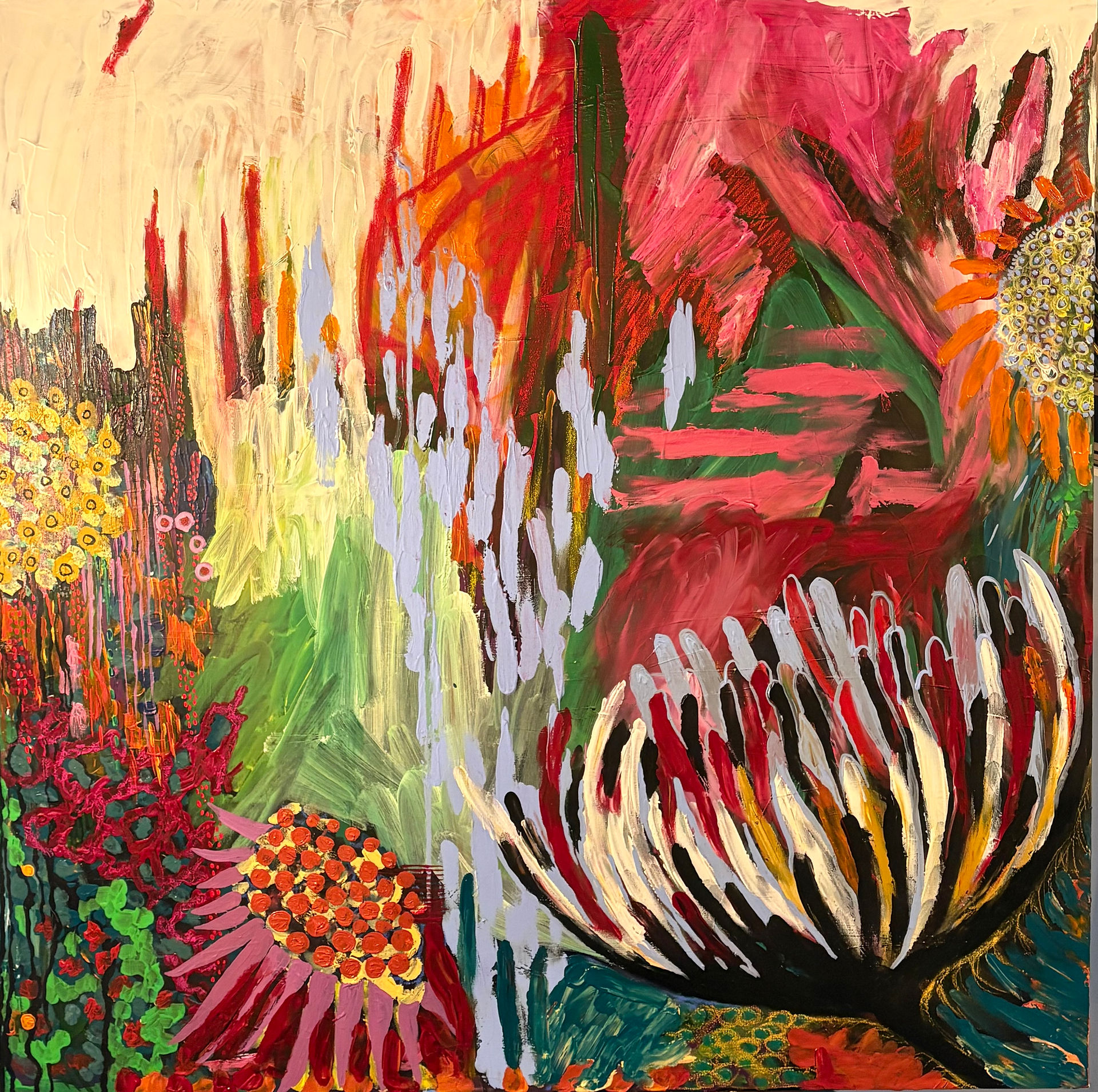

Art as Travel: A Bucket List of Inspiring Art Destinations


A painting can make a room feel like a train station. Stand in front of the right canvas, photograph, mural, or sculpture, and the walls start to loosen. A street you have never walked feels close. A century you never lived through feels almost touchable.
That is what I love most about art. It does not replace travel, but it can begin the journey before a ticket is booked. It can also deepen a trip once you arrive. Art teaches the eye what to notice: a color repeated on a door, a shadow at noon, a pattern on tile, a face in a crowd, a story pressed into stone.
Art as Travel: A Bucket List of Inspiring Art Destinations, but it is also about a slower way of moving through the world. One guided by curiosity, not checklists. One where museums, murals, studios, theaters, and handmade objects become maps.

Art can take us somewhere before we know where we are going
Some works of art act like windows. They show a place so clearly that the viewer feels pulled across distance. Think of Hokusai’s waves, Monet’s gardens, Georgia O’Keeffe’s desert flowers and bones, or Edward Hopper’s lonely diners and hotel rooms. These images are not travel brochures. They are more interesting than that. They capture mood, weather, silence, and the strange feeling of being somewhere new.
Other works act like doors. They do not show a location directly, but they create the feeling of movement. Abstract Expressionist paintings by Jackson Pollock or Joan Mitchell can feel like weather systems. A Richard Serra sculpture changes as you walk through it. A James Turrell light installation can make space feel less fixed, as if the sky itself has become a room.
Art can also send us traveling through time. Renaissance frescoes, ancient ceramics, Edo-period prints, Harlem Renaissance photographs, Bauhaus furniture, and contemporary installations all carry traces of the lives around them. They ask quiet questions. Who made this? Who paid for it? Who was invited to see it? Who was left outside?
That is why art travel feels different from ordinary sightseeing. It is less about collecting famous names and more about entering another way of seeing.
Different art forms create different kinds of journeys
Not every art form moves us in the same way. Part of the pleasure is learning the kind of travel each one offers.
Painting invites slow looking.
A painting does not change, but attention does. The longer you stand with a work, the more it gives back. At first, you see the subject. Then you notice the edges, the brushwork, the empty space, the places where the artist changed their mind.
Photography compresses distance.
A photograph can carry the charge of a place in a fraction of a second. Dorothea Lange’s portraits, Nan Goldin’s intimate interiors, Gordon Parks’ documentary work, and Hiroshi Sugimoto’s seascapes all move differently. Some bring us close to lived experience. Others make distance feel dreamlike.
Architecture makes travel physical.
Buildings tell the body where it is. The cool hush of a cathedral, the clean geometry of a modernist house, the curve of a museum ramp, the dense pattern of a tiled courtyard, all shape memory. Sometimes the building is the artwork. The Guggenheim Museum in New York, designed by Frank Lloyd Wright, or the concrete museums Tadao Ando designed in Japan, can turn walking into part of the experience.
Street art changes the pace of a city.
Murals, wheatpaste posters, graffiti, and public sculptures are discoveries. They reward wandering. Unlike a museum label, a piece on a wall may not explain itself. You meet it where people live, shop, argue, commute, and gather.
Performance makes the journey temporary.
Dance, theater, music, and performance art remind us that some experiences cannot be saved in the usual way. You had to be there. That is part of their force. A flamenco performance in Seville, a jazz set in New Orleans, or an experimental theater piece in Berlin can become the emotional center of a trip.

My personal art trip bucket list
I keep a running list of places I want to visit or revisit because of the art waiting there. Some are famous for museums. Others are known for street art, architecture, craft, or a strong local creative pulse. The list changes as I read, see exhibitions, and talk to other travelers.
Here are the places that keep calling.
Mexico City for murals, modernism, and living color

Mexico City feels essential for anyone interested in how art and public life meet. I would start with the murals of Diego Rivera, José Clemente Orozco, and David Alfaro Siqueiros, especially at the Palacio de Bellas Artes and the National Palace. Their work carries politics, myth, labor, and history at mural scale.
Then I would visit the Museo Frida Kahlo, also known as the Blue House, not only for Kahlo’s paintings but for the sense of place around her life and work. Nearby, the Museo Anahuacalli, designed around Rivera’s collection of pre-Hispanic objects, would add another layer.
Art movements and artists to seek out:
Mexican muralism
Frida Kahlo and Diego Rivera
Remedios Varo and Leonora Carrington
Contemporary galleries in Roma and Condesa
This is the kind of city where I would plan museum days, then leave long afternoons open for markets, architecture, food, and unexpected color on ordinary streets.
Paris for Impressionism, modern art, and the art of returning

Paris can seem too obvious, but some destinations are obvious for good reason. I would go for the familiar works and try to see them with fresh eyes.
The Musée d’Orsay would be first on my list for Impressionism and Post-Impressionism: Monet, Degas, Renoir, Cézanne, Van Gogh, and Gauguin. The building itself, a former railway station, adds a lovely irony. You are traveling by looking at art inside a place once built for departure.
I would also make time for the Musée de l’Orangerie to sit with Monet’s Water Lilies, then visit the Centre Pompidou for modern and contemporary art. The Louvre deserves time too, but I would choose a focused route rather than trying to conquer it.
Art movements and artists to seek out:
Impressionism
Post-Impressionism
Cubism through Picasso and Braque
Modern art at the Centre Pompidou
Contemporary shows in smaller galleries
Paris reminds me that returning to famous art can be a form of travel too. The destination changes because the viewer changes.
Naoshima and Teshima for art, architecture, and silence

The Japanese art islands of Naoshima and Teshima sit high on my list because they offer something rare: art experienced slowly, in relation to light, sea, weather, and walking.
On Naoshima, I would visit the Chichu Art Museum, designed by Tadao Ando, where works by Claude Monet, James Turrell, and Walter De Maria are installed with great care. I would also want to see the Benesse House Museum, where art, architecture, and lodging connect in unusual ways.
On Teshima, the Teshima Art Museum, created by artist Rei Naito and architect Ryue Nishizawa, sounds like the kind of place that changes your breathing before it changes your thoughts.
Artists and experiences to seek out:
Tadao Ando’s architecture
Yayoi Kusama’s outdoor pumpkin sculptures
James Turrell’s light works
Monet’s Water Lilies at Chichu
Rei Naito at Teshima Art Museum
This trip appeals to me because it asks for quiet. It seems less like art consumption and more like attention practice.

New York City for scale, contrast, and creative argument

New York is one of the great art cities because it never offers just one story. It contains old masters, experimental performance, street art, photography, design, and entire movements that reshaped the art world.
The Museum of Modern Art is a must for Van Gogh’s The Starry Night, Picasso’s Les Demoiselles d’Avignon, works by Matisse, Warhol, Bourgeois, and many others. The Metropolitan Museum of Art offers a different kind of time travel, from ancient objects to fashion to European painting. The Whitney Museum of American Art brings the story closer to the present.
I would also leave museum walls behind for the galleries of Chelsea, public art along the High Line, and murals in neighborhoods where street art changes quickly.
Artists and movements to seek out:
Abstract Expressionism
Pop Art
The Harlem Renaissance
Contemporary American art
Street art and public installations
New York’s art scene can feel intense, but that is part of its pull. It argues with itself. It lets tradition and experiment share the same subway ride.
Florence for the shock of the Renaissance

Florence offers a different kind of encounter. So much of its art is tied to patronage, faith, power, craft, and the rise of humanism. It is one thing to read about the Renaissance. It is another to stand under a dome or face a sculpture that changed how people imagined the human body.
I would start at the Uffizi Gallery for Botticelli, Leonardo da Vinci, Michelangelo, Raphael, and Caravaggio. Then I would visit the Accademia Gallery for Michelangelo’s David. The churches matter too, especially Santa Maria Novella, Santa Croce, and the Brancacci Chapel, where Masaccio’s frescoes helped shift the course of Western painting.
Artists and movements to seek out:
Early Renaissance painting
High Renaissance sculpture
Botticelli’s mythological works
Michelangelo’s sculpture
Giotto, Masaccio, and Fra Angelico
Florence is on my bucket list because it makes art history feel less like a textbook and more like a city you can cross on foot.
Berlin for reinvention and the edge of the unfinished

Berlin interests me because its art scene carries memory and reinvention side by side. I would visit the East Side Gallery for murals painted on a remaining section of the Berlin Wall, then balance that with museums and contemporary spaces.
The Neue Nationalgalerie
, designed by Mies van der Rohe, would be high on my list for modern art and architecture. The Hamburger Bahnhof is another key stop for contemporary art. I would also seek out works by Käthe Kollwitz, whose drawings and prints hold grief and human dignity with unusual force.
Artists and movements to seek out:
Bauhaus design and modernism
German Expressionism
Käthe Kollwitz
Contemporary installation art
Street art connected to memory and protest
Berlin seems like a place where art does not sit still. It keeps asking what should be preserved, what should be repaired, and what can be made from what remains.
Santa Fe for desert light, Indigenous art, and Georgia O’Keeffe

Santa Fe belongs on this list for its deep relationship with place. I would visit the Georgia O’Keeffe Museum to spend time with the artist’s paintings of flowers, bones, hills, and New Mexico forms. Her work is often reproduced, but I suspect the originals hold a different kind of quiet.
I would also make time for the Museum of Indian Arts and Culture and the Wheelwright Museum of the American Indian, approaching both with respect for the living cultures represented there. Santa Fe also has a long gallery tradition, especially around Canyon Road, along with contemporary spaces like SITE Santa Fe.
Artists, museums, and traditions to seek out:
Georgia O’Keeffe
Pueblo pottery and textiles
Contemporary Indigenous artists
SITE Santa Fe
Regional modernism
Santa Fe reminds me that art travel should include listening. Some works come from traditions that are not there for quick consumption. They ask for care, context, and humility.
How I would plan an art-first trip
An art-focused trip can become exhausting if every hour is scheduled. I have learned, sometimes the hard way, that looking takes energy. A full museum day can be as tiring as a long hike.
My ideal plan would mix structure and drift.
Choose one major art experience per day A museum, studio visit, performance, or walking tour can anchor the day.
Leave space after the main event The mind needs time to absorb what it just saw.
Read a little before going A short artist biography or movement overview can make the work feel more alive.
Follow one theme Color, public art, women artists, printmaking, architecture, or self-portraits can give a trip a thread.
Buy small and local when possible A print, postcard, studio object, or handmade item can carry memory better than a rushed souvenir.
I also like the idea of keeping an art travel notebook. Not a perfect sketchbook, just a place for museum tickets, quick drawings, color notes, overheard phrases, and the one work that stayed in my mind overnight.

Bring the journey back with you
The best art trips do not end when the suitcase is unpacked. They change what you notice at home. A wall on the morning commute becomes a study in texture. A neighborhood theater feels more inviting. A local museum you once rushed past becomes a place to return to.
That may be the real gift of treating art as travel. It expands the idea of distance. Sometimes the journey leads to Mexico City, Paris, Naoshima, New York, Florence, Berlin, or Santa Fe. Sometimes it leads to a gallery across town, a mural under a train track, a concert in a small room, or a painting that makes you stand still for ten full minutes.
I would love to hear what belongs on your art trip bucket list. Which museum, city, artist, mural, performance, or handmade object has made you feel transported? Share your favorite art travel experiences and the destinations that changed how you see.


Comments